Contain active water and protect an opened roof with a safe temporary dry-in, then document the permanent repair after conditions settle.
Emergency roof repair starts when waiting for a normal inspection could allow more water into the building. A branch may have opened the shingle field, wind may have peeled a membrane edge, or water may be moving through plaster and insulation during heavy rain. Call (617) 397-4837, explain whether water is active, and keep everyone away from the roof and any sagging or electrical area. A tarp or dry-in is temporary weather control. It buys time for safer inspection and a permanent written scope; it should never be confused with a finished roof repair.
Control the room without entering the danger area
Move furniture, electronics, and rugs away from the drip path if you can reach them safely. Use containers and plastic to limit spreading water, and take photos of the stain and room from a dry position. Do not touch wet fixtures, enter an area with a bulging ceiling, or pull down broad sections of plaster or drywall. Do not climb into an attic where access, electricity, or wet surfaces create a hazard. From outdoors, note visible missing material or a fallen branch without walking under debris. These details help the contractor prioritize the call and choose equipment without asking you to inspect the roof yourself.
A dry-in reduces exposure while preserving the repair decision
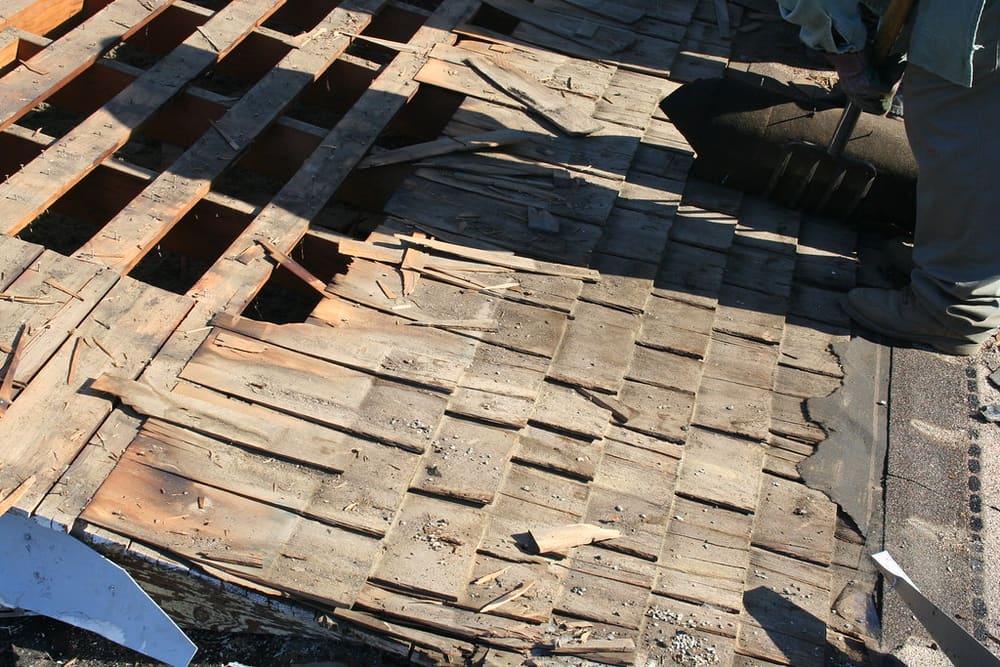
Temporary work may include a secured tarp, a board over an opening, limited flashing, or a compatible membrane patch. The method depends on roof shape, wind, rain, ice, and whether stable material is available for attachment. Emergency work should avoid hiding more damage than necessary because the permanent inspection still needs to identify the failed assembly. Ask what area was covered, how long the temporary protection is expected to remain serviceable, and what weather could compromise it. The usual planning range for an emergency tarp or dry-in is $400-$1,000, confirmed after the contractor reviews access and the opening.
Urgent calls are sorted by water, structure, and safe access
During widespread wind or heavy rain, several homeowners may call at once. Active interior water, exposed sheathing, structural impact, occupied rooms, and safe roof access affect the order and type of response. A clear first report should include the address, building height, roof material if known, location of the interior symptom, visible damage from the ground, and whether the property has a flat section or steep slope. Same-day arrival cannot be promised when travel or roof conditions are unsafe. If temporary protection cannot be installed immediately, the scheduling response should say so plainly and distinguish an emergency visit from a normal leak inspection.
Return for the permanent roof scope
After conditions improve, the covered area should be inspected closely. The permanent quote needs to identify damaged roof covering, underlayment, sheathing, flashing, insulation clues, and the sound material where new work will tie in. A single opening on a healthy roof may need only a targeted repair. Broad wind loss or brittle surrounding shingles may justify replacement planning. If weather caused the damage, the storm and wind guide explains factual photo documentation; coverage still belongs to the insurer. The final contract should separate the earlier dry-in charge from repair or replacement and explain permit responsibility, cleanup, materials, and warranty terms.
A dry-in limits exposure; the permanent scope follows when the roof can be opened and evaluated safely.
It is temporary weather protection, not the final construction scope. Once wind, rain, or ice no longer makes inspection unsafe, the covered area should be opened as needed and evaluated for damaged roofing, underlayment, sheathing, and flashing. Ask for the permanent work and any dry-in charge to be listed separately.
Should I climb up to place my own tarp?
No. Wet material is slippery, wind can move a tarp suddenly, damaged decking may not support weight, and a ladder can place you below falling material. Limit indoor water only from a safe area, keep people away from the affected ceiling, and call for a professional access decision.
What details help triage an emergency call?
Share the address, number of stories, roof material if known, interior leak location, whether water is still moving, visible openings from the ground, recent weather, and any branch or structural impact. Mention electrical fixtures, sagging ceilings, or access limits so the urgency and safety concern are understood.
Speak with a Massachusetts roofing contractor serving your area. Under M.G.L. c.272 § 99,
recording begins only after the required all-party notice is provided.