Plan an asphalt replacement with real ranges, then account for access, roof geometry, decking, ventilation, and older material transitions before comparing bids.
Many Massachusetts architectural asphalt replacements fall between $14,000 and $35,000, or roughly $600-$1,000 per square installed. That range is a planning tool for common asphalt work, not a quote for an unseen roof. Height, pitch, dormers, chimneys, tear-off layers, damaged sheathing, ventilation changes, staging, and local permit requirements can all move the final number. Boston and Cape access can add setup time, and slate, cedar, or complex coastal work is custom-quote only. Call (617) 397-4837 for a free inspection and written scope that explains what is included before you compare totals.
Typical Massachusetts Roofing Price Ranges
Scope
Typical range
What it includes
Minor roof repair
$350-$850
Small shingle repairs, pipe boots, simple flashing attention, or limited slate replacement where access is straightforward.
Moderate leak repair
$800-$2,000
Leak tracing, ice-dam damage, chimney flashing, valley work, or a rubber-roof patch after the source is confirmed.
Major section repair
$2,000-$6,000
Larger roof sections, sheathing replacement, structural carpentry, or careful tie-ins around slate, cedar, or low-slope areas.
Emergency tarp or dry-in
$400-$1,000
Temporary protection after coastal wind, a nor'easter opening, falling branches, or active water entry.
Architectural asphalt replacement
$14,000-$35,000
Common full-replacement planning range for many Massachusetts homes, roughly $600-$1,000 per square installed.
These are 2026 market planning ranges for Massachusetts. The independent contractor
confirms the firm number after inspecting roof size, access, material, decking,
municipal requirements, and weather-related damage.
Start with measured roof area, then price the difficulty
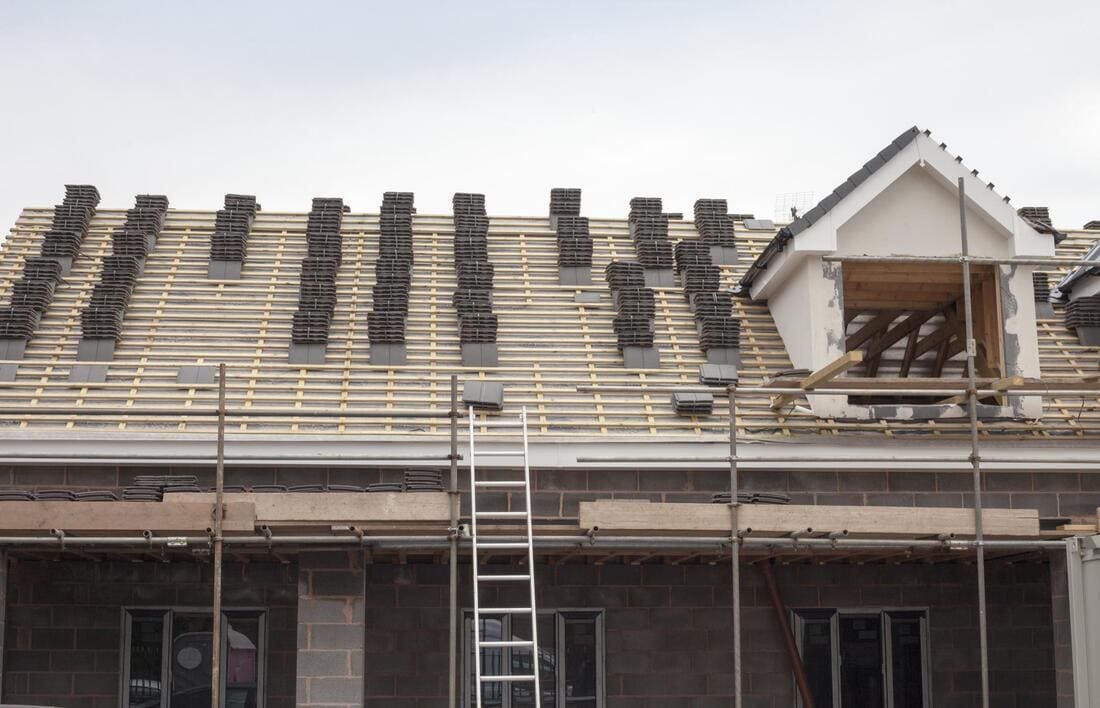
A roofing square covers 100 square feet of roof surface, not living area. Valleys, hips, dormers, overhangs, and waste make the measured roof larger than a simple floor-plan estimate. From there, pitch and height affect staging and labor; chimneys, skylights, walls, and low-slope transitions add detail work; multiple tear-off layers and disposal add handling. Tight Boston lots may constrain material delivery and debris removal. Coastal properties may require more time around edges and weather exposure. The proposal should show enough about measurement and complexity to explain why its total differs from a broad per-square range.
Decking and ventilation are the major unknowns below the surface
The roof covering can hide split boards, delaminated panels, old openings, and staining from previous leaks until tear-off. Ask how the quote handles replacement sheathing: included quantity, unit price, approval process, and photo documentation. Older Massachusetts framing and later additions can also complicate airflow. Intake and exhaust should be evaluated as a system before new shingles lock in the same heat and moisture problem. A low bid that omits decking allowances, ventilation, flashing, edge protection, disposal, or cleanup is not directly comparable with a detailed scope that includes them.
Compare the purpose of a repair with the scope of replacement
A $350-$850 minor repair can be sensible when one boot, flashing joint, or small shingle area has failed and the surrounding roof remains stable. Moderate leak work commonly falls between $800 and $2,000; major section work ranges from $2,000 to $6,000. Those tiers should not be added mechanically to predict a replacement. Instead, ask what useful problem the repair solves and whether another weak plane is likely to fail soon. Review repair diagnosis and inspection outcomes before spending repeatedly on unrelated patches. Replacement becomes more practical when the repair cannot tie into sound material or deterioration crosses several areas.
Normalize every bid before comparing the bottom line
Put each proposal beside the same checklist: measured roof area, tear-off layers, shingle or membrane system, underlayment, ice-and-water protection, ventilation, flashing, edge metal, penetrations, decking allowance, disposal, landscaping protection, cleanup, permit responsibility, schedule assumptions, and warranty terms. Then compare exclusions. One proposal may leave chimney masonry, interior repairs, gutter removal, or low-slope work outside the total while another includes coordination. Ask how material upgrades, extra wood, weather delays, and unavailable products become approved changes. A lower number is useful only when it buys the same work. Your contractor verifies municipal permit requirements. Before signing residential work, request the serving contractor’s HIC registration and applicable CSL, then check both through the free mass.gov lookups. Use storm documentation only for observed conditions; an insurer controls coverage. The clearest quote is the one that tells you how changes will be handled after tear-off.
A useful replacement number begins with the measured roof and a written account of what tear-off may uncover.
What is a typical asphalt roof replacement range in Massachusetts?
Many architectural asphalt replacements fall between $14,000 and $35,000, roughly $600-$1,000 per square installed. Roof size, waste, pitch, height, access, tear-off, decking, ventilation, flashing, and municipal requirements determine the firm quote after inspection.
Why are slate and cedar roofs not priced with a simple range?
Condition varies piece by piece, and the scope may involve matching material, specialized access, fasteners, underlayment, flashing, and transitions to other roof systems. Cedar, slate, and complex coastal work therefore requires an inspection and custom quote rather than an asphalt teaser price.
Who checks local permit requirements before replacement?
Requirements vary by municipality and the exact construction scope. The serving contractor should verify what applies and identify permit responsibility in the written proposal. Never assume a rule or fee from another city applies to your address. If two bids assign permit work differently, include that difference when comparing their totals, schedules, and homeowner obligations.
Is emergency dry-in included in replacement pricing?
Treat it as a separate scope unless the written proposal says otherwise. Emergency tarp or dry-in work typically ranges from $400 to $1,000 and is intended to reduce water entry. Any credit, removal, or transition to permanent replacement should be stated by the contractor in writing.
Speak with a Massachusetts roofing contractor serving your area. Under M.G.L. c.272 § 99,
recording begins only after the required all-party notice is provided.